Naughty consoles: musings on Playstation, SEGA, and Nintendo
It’s no secret that the 2000s have fronted as the new poster child for all things nostalgic. Nostalgia has become the new in thing, in fact, it’s so in that people feel nostalgic for times they never lived through. There’s actually a word for that, anemoia: nostalgia for a time you didn’t know. I know many a critical theorist who, on this topic, may say we live in times with no depiction of what the future may look like. Perhaps babies born just shy of being real “90’s babies” and those born shortly after the new millennium are now reminiscing on their adolescence, and perhaps those born much further along feel a great sense of FOMO on what the 2000s had to offer, who knows. One thing is for sure: ads from the 2000s have been far from neglected in the uprooting of 2000s aesthetics, and Sony in particular has been dealt a great deal of attention for their take on console advertising.
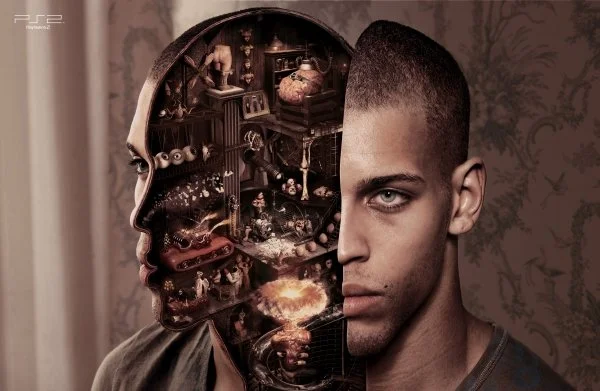
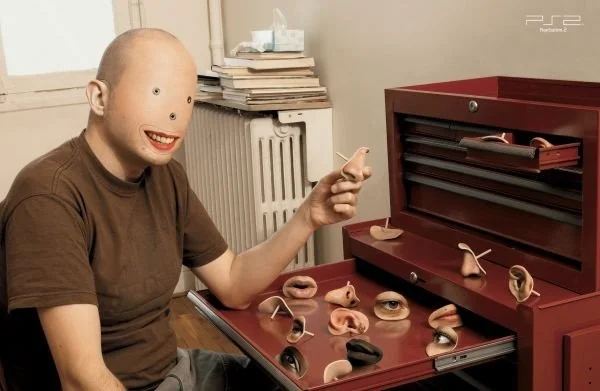
With the release of the Playstation 2, the Playstation team took an axe and began hacking away at the remains of the traditional semiotics lingering around the home console: there were no children, no families, and the idea of play became less about wholesome nuclearity and more about sex. This console was naughty, and a slew of scandalous print ads delivered a message that seems rather obvious today: young adults are gamers too. In the world of Playstation 2 gaming became something kind of filthy: sniffing panties shaped like the iconic Playstation buttons, condoms shaped like the iconic Playstation buttons, nipple piercings shaped like… well, the iconic Playstation buttons.



As tempting as it is to compare the Playstation 2 campaign with Nintendo’s activities from the same period (a temptation I’ll fail to resist later on), SEGA had already dealt a fair few lashings to the wholesome video game console. In the 90s, SEGA had successfully positioned itself as the stylish opponent of Nintendo with its own game library and IPs: Sonic, in particular, played a major role in the construction of SEGA as the cooler, trendier brand. ‘Genesis does what Nintendont’ read the copy of several ads published by the company.
You could say SEGA had a head start in the race to make video game consoles edgy, bearing the initial brunt of any risks associated with suggestive copy (“the more you play with it, the harder it gets”) and an unmissable tongue-in-cheek attitude behind a comparative marketing campaign that bolstered the cool perception of the brand.
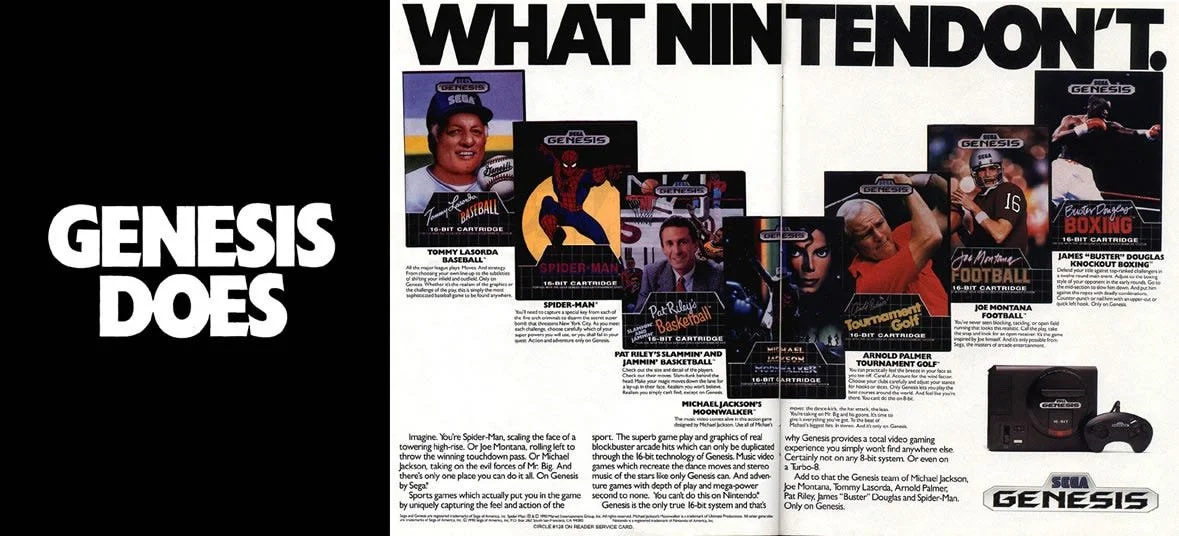
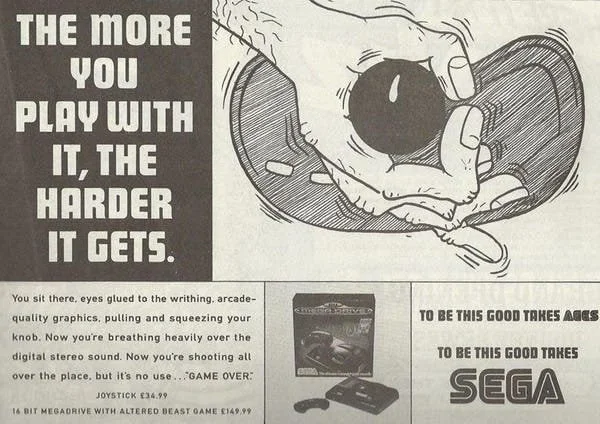
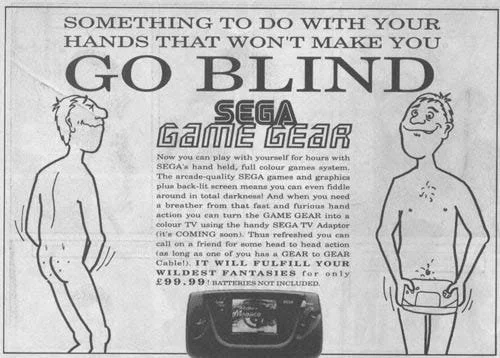
While SEGA had garnered a considerable audience firing shots at Nintendo and making use of provocative copy, the agency responsible for curating the brand’s unique voice and attitude was dropped in favour of a more familiar, safer approach in 1996. Ken Horowitz from the SEGA-16 community articulated the disaster of this shift poignantly in 2006, writing:
“It wasn’t necessarily about the quality of the gameplay (many people today question just how much better a game Sonic The Hedgehog really is than Super Mario World); it was about making people want the Genesis. This attitude, above all else, was what allowed Sega to claim more than 50% of the video game market by 1994, and the decision to deviate from it would be what would eventually cause it to lose it all when the Sony Playstation debuted in 1995. It has been suggested that Sega decided to change its philosophy completely with the Saturn, opting for a more passive and family-orientated approach in an attempt to give a fresh face to its new console.”
(Horowitz, 2006)
SEGA eventually dropped the act, but it was this approach that paved the way for the campaign behind Playstation 2, allowing the console to come in stomping with unabashed nudity and taboo. Making the implicit explicit, Playstation left innuendo and suggestion at the door in favour of a much grittier communication style than SEGA had ever dared to utter. After SEGA reverted back to the family, Playstation seemed to caution against starting one, after all, why would you sacrifice time that could be spent playing on their console? In fact, the only birth you should be concerned with is the rebirth you’ll experience upon picking up their console.


With the release of the Playstation 2, what had previously been a product targeted towards kids was now a full-fledged symbol of the young adult. If SEGA tested the waters, Playstation took their success as cue to dive into the deep end, not just for provocation’s sake, but for the sake of moving an adult demographic becoming increasingly aware of the realities of corporate capitalism:
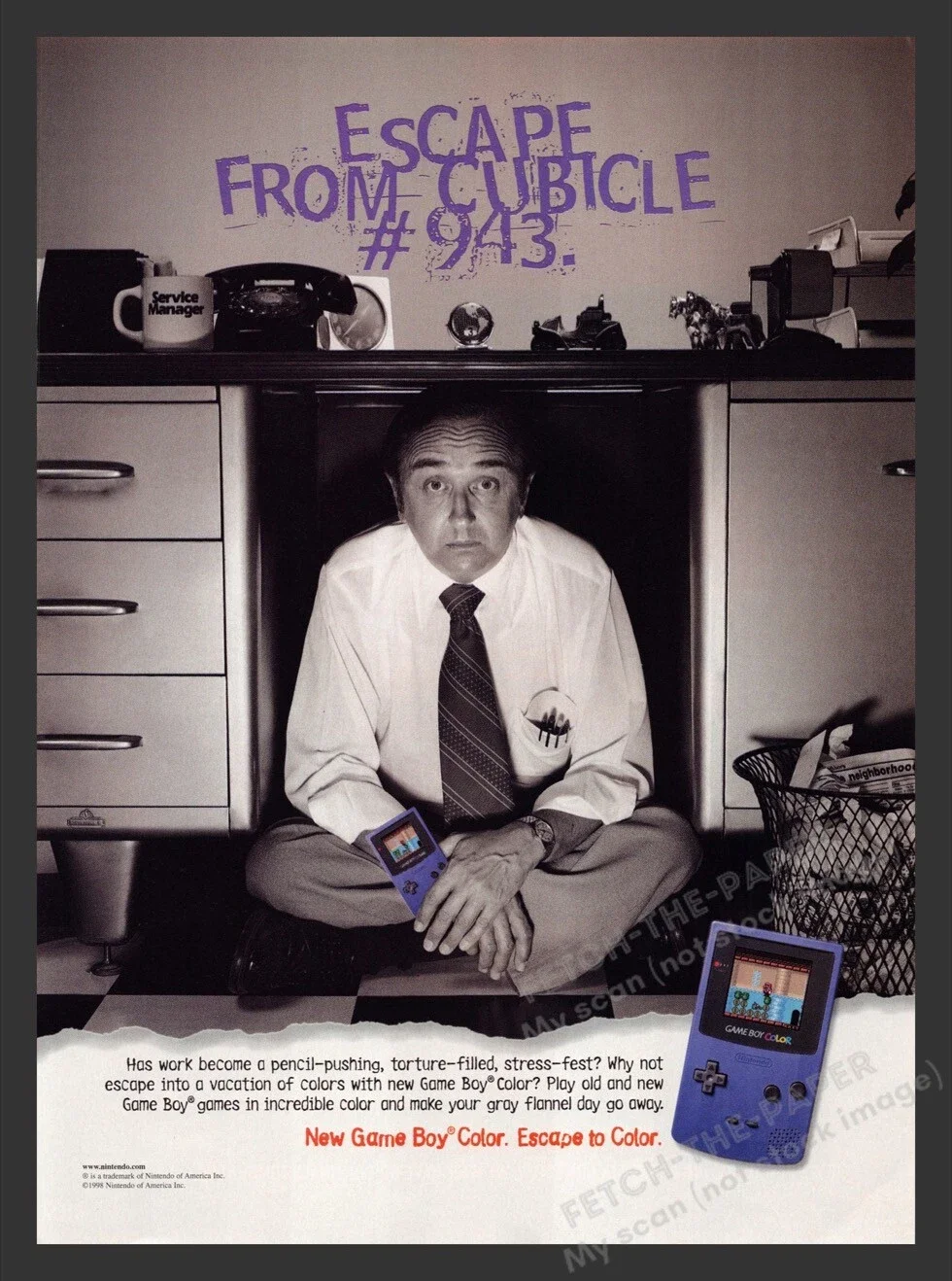
“During the late 90s and early 2000s, corporate culture was becoming more robust. More offices and cubicles were built, and less laborious jobs were in demand. With computers and the internet extending their reach into the cultural zeitgeist, corporate politics was born, and with office, politics came fears of one trapped in their sedentary profession. Add in the loss of personal motivation and the dread of being subject to your supervisor’s passive-aggressive emails, and you’ve got a Sony ad campaign that resonates with the US and EU market in a way that has not yet been replicated.”
(RAMCPU)
The Playstation 2, per their own copy, was now a “third space” for those who feared the mundanities of everyday adult life. If the console started in the home, the Playstation 2 kidnapped it and placed it somewhere less tangible: it wasn’t in the home, it wasn’t in the workplace, but situated in the distinctly racy world of Playstation’s brand. Reinforced by the “Different Place, Different Rules” tagline appearing in Playstation’s video ads, the brand had successfully positioned itself as the go-to console for escapists. Playstation had been working on sitting themselves at this table for a while, in fact, one of their most famous videos orbits around the “Double Life”, released prior to the Playstation 2.
On Playstation’s curation of the third place, Mark McGuire notes that the virtual space offers the promise of liberation for the player:
“…Freedom from the confines of the physical body, freedom from the constraints of geographic space, freedom from the fear of strangers, and freedom from control.”
(Mark McGuire, 2003)
The allure of being liberated from the physical body against the backdrop of corporate capitalism would seemingly justify the overwhelming presence of the mangled, abstract body in much of the print associated with the Playstation 2. The inclusion of sexuality


However, it wasn’t just Playstation circling around the ideas of escape and sexuality in their print ads. In fact, Nintendo took a shot at it themselves in the late 90s.
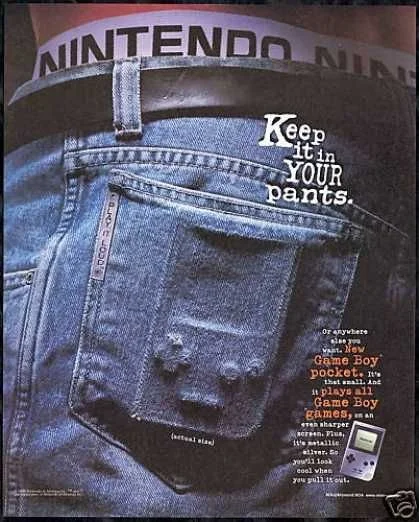

Sexual overtones would be used again by Nintendo in the early to mid 2000s with the release of their “Touching Is Good” campaign for the Nintendo DS:
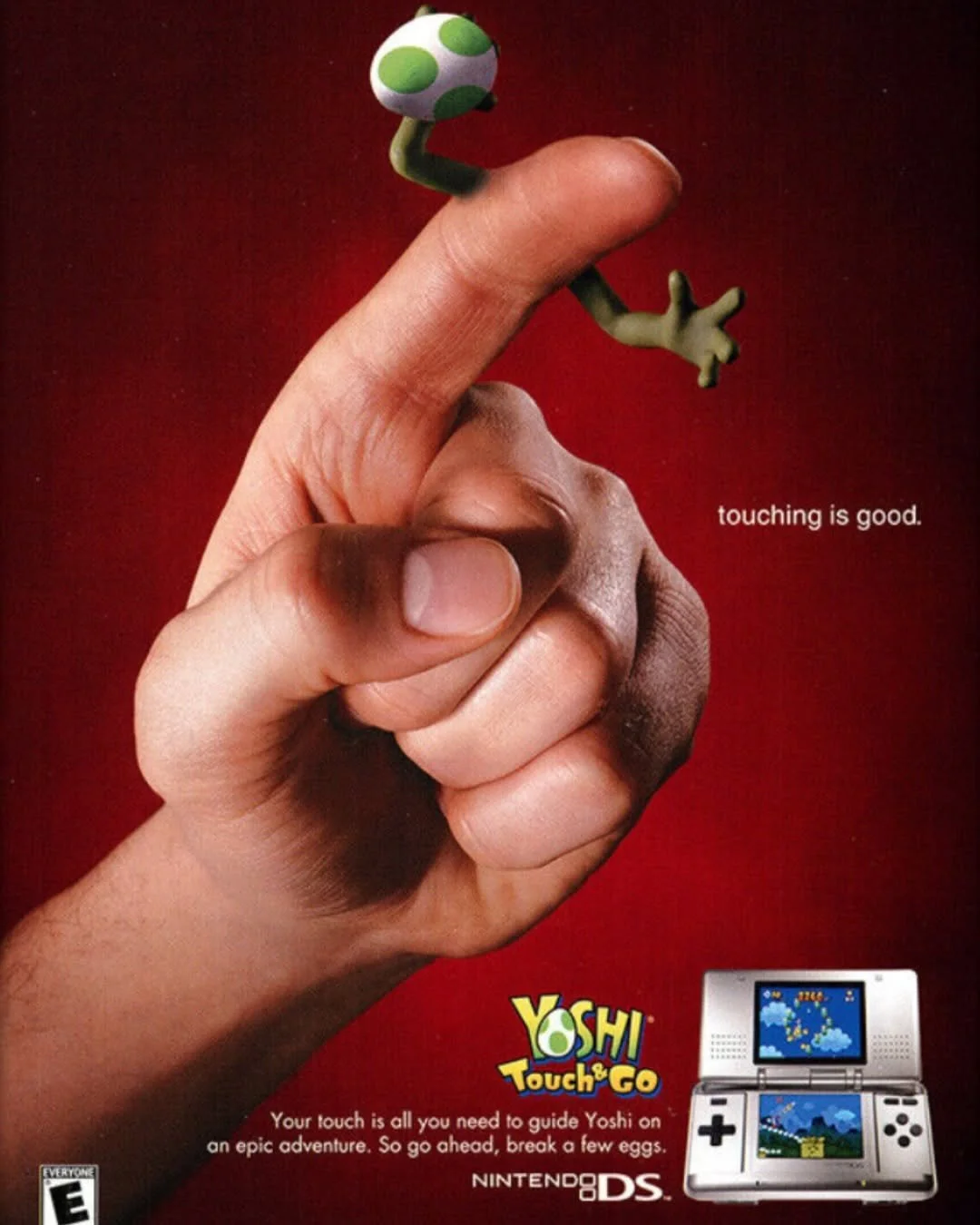
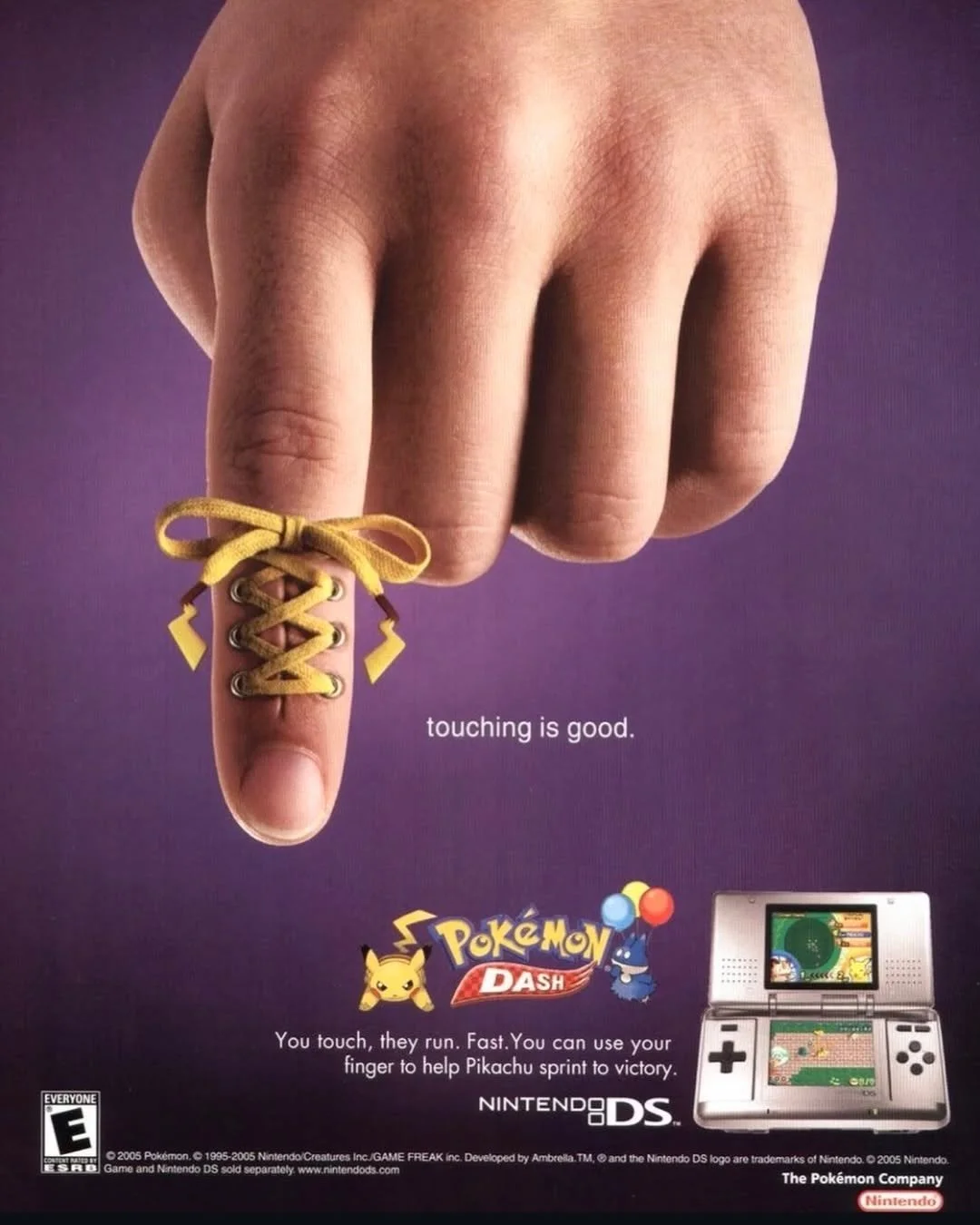
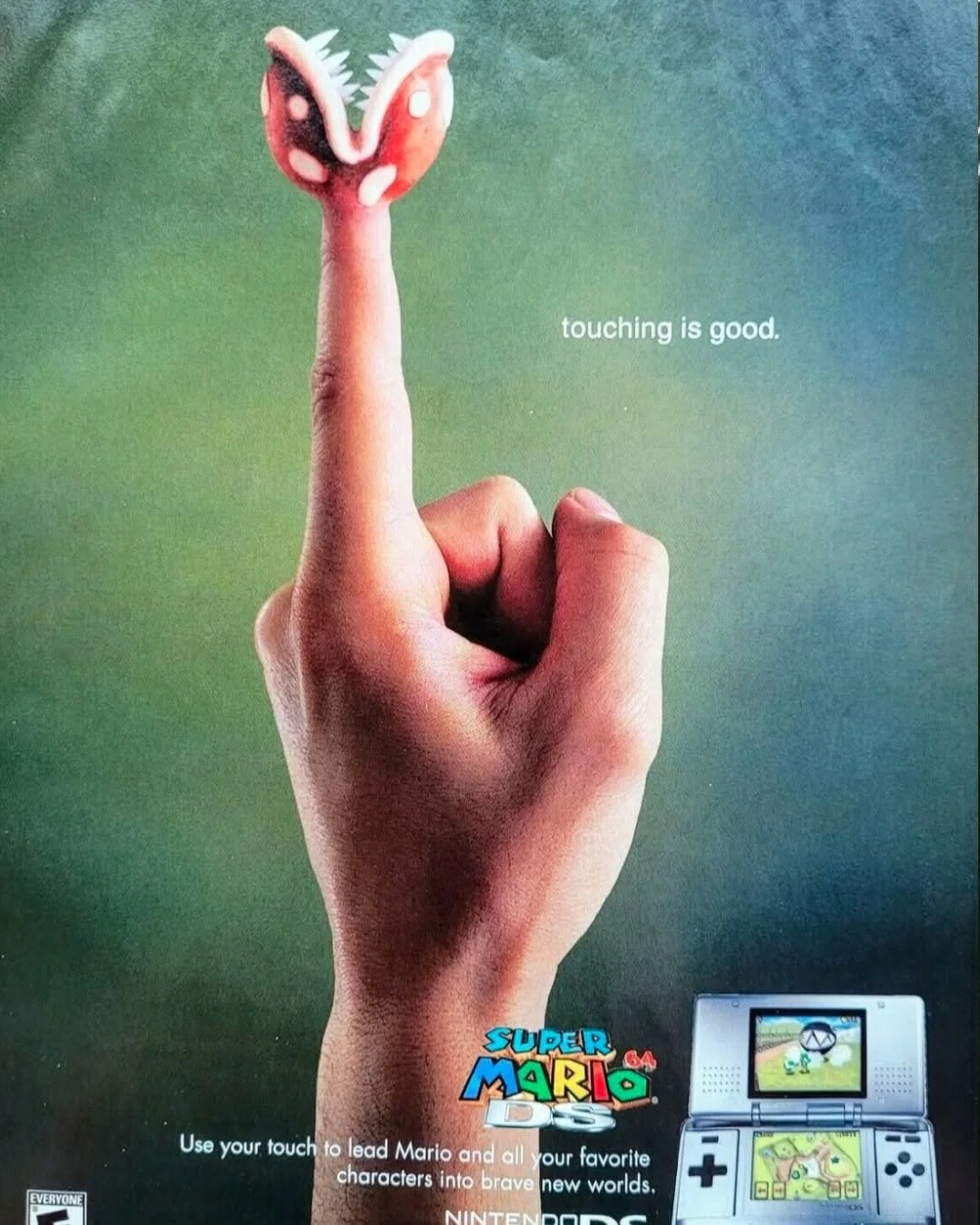
What separates these provocative campaigns from Playstation and Nintendo is precisely the “third space” Playstation had curated as the setting for their visual storytelling. The “Different Place, Different rules” tagline of Playstation’s brand-world offers a justification for their sexual overtones and bodily abstraction, whereas Nintendo and SEGA hint at sexuality as metaphor for particular product features: joysticks, touchscreens, and portability.
References:
Playstation 2 Campaign Images: https://thisisnotadvertising.wordpress.com/2011/07/14/tbwaparis-for-playstation-20032007-five-years-of-amazing-works/
RAMCPU: https://sabukaru.online/articles/playstation-2-advertisements
Mark McGuire (2003): https://www.researchgate.net/profile/Mark-Mcguire/publication/228709423_PlayStation_2_Selling_the_third_place/links/544610040cf22b3c14ddfbb7/PlayStation-2-Selling-the-third-place.pdf
Ken Horowitz (2006): https://www.sega-16.com/2006/08/marketing-the-genesis-segas-advertising-1989-1996/
